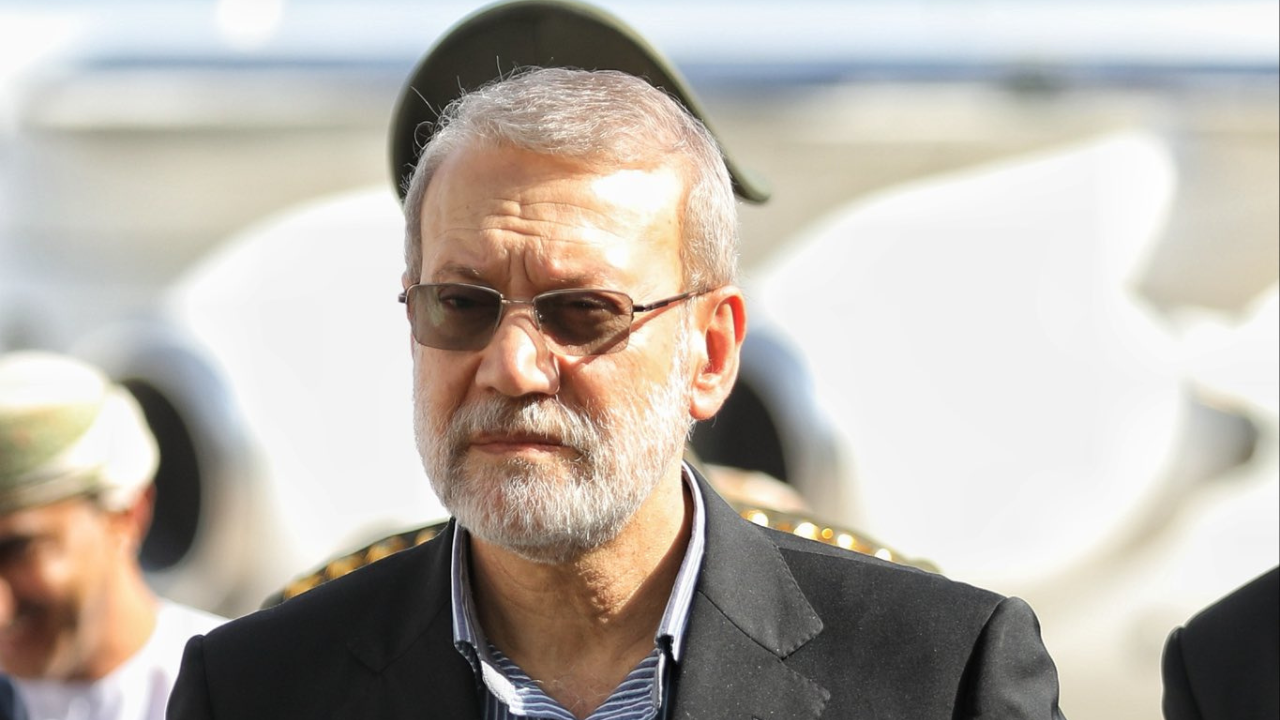
The Shifting Sands of Power: Ali Larijani Steps into Iran's Void
The geopolitical landscape of the Middle East has been irrevocably altered. In the immediate aftermath of devastating US-Israeli airstrikes that claimed the lives of Supreme Leader Ayatollah Ali Khamenei and IRGC Commander Mohammad Pakpour, Iran finds itself at a pivotal crossroads. A profound power vacuum has emerged, and a figure once known for his pragmatic approach to international relations, Ali Larijani, has dramatically stepped into the spotlight, reshaping the discourse and potentially charting a new, more confrontational course for the Islamic Republic. The question on many minds is: could Ali Larijani emerge as a leading contender for
Khamenei's successor, or is he merely a powerful placeholder in a time of crisis?
Ali Larijani: From Pragmatic Philosopher to Fiery Commander
For decades, Ali Larijani was a name synonymous with a measured, intellectual approach within Iran's intricate political establishment. An establishment insider, he hails from one of the country's most prominent clerical families, lending him significant religious and political legitimacy. His academic pursuits included delving into the works of 18th-century German philosopher Immanuel Kant, an intellectual grounding that seemed to inform his diplomatic style.
Larijani's career has been marked by significant, high-level roles. He previously headed the Supreme National Security Council (SNSC) two decades ago, demonstrating a long-standing involvement at the heart of Iran's security apparatus. More recently, prior to the strikes, he was instrumental in steering complex nuclear negotiations with Western powers, even engaging in indirect talks with the United States via Oman. His public statements often struck a pragmatic tone, acknowledging that concerns about Iran acquiring nuclear weapons could be addressed. He was a figure often seen as capable of navigating the often-rival factions within the Iranian system, maintaining loyalty to Khamenei while fostering a reputation for practical, results-oriented diplomacy.
However, this carefully cultivated image of the "pragmatic philosopher" shattered in the wake of the devastating airstrikes. Just 24 hours after the attacks, Larijani took to state television with an entirely new, incendiary rhetoric. "America and the Zionist regime (Israel) have set the heart of the Iranian nation ablaze," he declared on social media. "We will burn their hearts. We will make the Zionist criminals and the shameless Americans regret their actions." This stark transformation has left many observers grappling with the future direction of Iranian policy under his potential influence.
Stepping into the Vacuum: Larijani's Broadening Portfolio
Larijani's re-emergence into the highest echelons of power began last year with his appointment as Secretary of the Supreme National Security Council (SNSC) in August. This strategic role placed him back at the core of Iran's security establishment, managing a vast and critical portfolio. His responsibilities spanned from delicate nuclear negotiations – a role that saw him traveling to Oman to prepare for indirect talks with the US, even as Washington ramped up its military presence in the Middle East – to Tehran's complex regional ties and, controversially, the violent suppression of internal unrest.
Indeed, just a month before the airstrikes and his shift in rhetoric, Larijani found himself sanctioned by Washington for allegedly directing a deadly crackdown on anti-government protests that swept across Iran. The US government detailed accusations that Larijani was at the forefront of efforts to crush these demonstrations, highlighting the complex and often contradictory nature of his public persona.
His diplomatic engagements, including several trips to key ally Moscow to discuss security ties, underscored his return to high-level diplomacy. Yet, it is his immediate response to the airstrikes that truly cemented his position as a central figure in the post-Khamenei era. He not only condemned the US and Israel for attempting to "plunder and disintegrate Iran" but also issued a stern warning to "secessionist groups" of a harsh response should they attempt any action. This broad mandate, encompassing national security, international diplomacy, and internal stability, has positioned him as a formidable force in filling the leadership void. For a deeper dive into this transformation, consider reading
Ali Larijani: From Pragmatist to Hardliner in Post-Khamenei Iran.
Analyzing the Transformation: Why the Hardline Turn?
The dramatic shift in Ali Larijani's rhetoric prompts critical analysis. Is this a genuine ideological conversion, or a calculated strategic maneuver in a period of unprecedented crisis and uncertainty? Several factors likely contribute to this hardline stance:
*
Consolidating Power in a Post-Khamenei Era: With the Supreme Leader gone, the race for succession—or at least for influence—is wide open. Adopting a fiery, nationalist posture allows Larijani to appeal to hardline factions, particularly within the Islamic Revolutionary Guard Corps (IRGC), and project an image of strength and resolve needed to lead Iran through a volatile period.
*
Responding to External Aggression: The scale and impact of the US-Israeli airstrikes, which also killed Iran's chief of staff Abdolrahim Mousavi and 40 other military commanders, necessitated a strong, unequivocal response. Any sign of weakness could be perceived as an invitation for further aggression, both externally and internally. Larijani's rhetoric reflects a nationalistic fervor aimed at galvanizing public support and projecting a unified front.
*
Strategic Leadership Calculation: Larijani's deep understanding of Iran's security apparatus and international relations, combined with his academic background, suggests a mind capable of complex strategic calculations. His shift could be a deliberate tactic to position himself as the strong, decisive leader Iran needs in this moment of crisis, rather than the conciliatory diplomat of the past.
*
Managing Internal Dissent: The crackdown on internal protests, for which he was sanctioned, indicates a willingness to use force to maintain order. His warning to "secessionist groups" underscores this resolve, aiming to prevent any internal fragmentation in the face of external attacks.
This pivot indicates that Larijani is not merely reacting but actively shaping the narrative and the country's response. His statements are designed to send clear messages to both domestic and international audiences, signaling a new, less predictable chapter for Iranian foreign policy.
The Path Forward: Is Larijani the Next Supreme Leader?
The question of who will be Khamenei's successor (or "Nachfolger" in German, as widely discussed in international circles) is arguably the most critical and complex facing Iran today. The system of succession is opaque, involving the Assembly of Experts, but key figures like Larijani will undoubtedly play a pivotal role.
Ali Larijani's advantages are undeniable: his long-standing insider status, his family's clerical pedigree, his control over the powerful SNSC, and his demonstrated ability to command public attention with his new, forceful rhetoric. He has effectively projected himself as a leader capable of uniting the nation and confronting its adversaries.
However, challenges remain. The Supreme Leader role traditionally carries immense religious authority, and while Larijani comes from a clerical family, his academic background and political career have often overshadowed his religious scholarly credentials. Other contenders, perhaps with deeper religious legitimacy, might emerge. Moreover, the call for a "temporary leadership council" – an idea he himself floated – suggests that a direct, immediate succession might not be straightforward.
Regardless of whether he ultimately assumes the mantle of Supreme Leader, Ali Larijani is undeniably a pivotal figure in Iran's immediate future. His fiery rhetoric, a stark contrast to his past pragmatism, has already reshaped Iran's diplomatic stance and response to aggression. How this translates into concrete policy – whether it leads to escalated confrontation or a renewed, albeit tougher, form of negotiation – remains to be seen. His journey from a Kantian philosopher to a hardline voice illustrates the dramatic shift occurring within Iranian politics. For more insights on this seismic shift, read
After Airstrikes: Ali Larijani's Fiery Rhetoric Reshapes Iran's Path.
Key Takeaways for Observers
- Larijani's Evolution is Critical: His transformation from pragmatist to hardliner is not merely rhetorical; it signals a potential shift in Iran's strategic outlook.
- Internal vs. External Pressures: His actions are a complex interplay of internal power struggles and external threats. Understanding both is crucial.
- Uncertainty Remains: While Larijani is a dominant figure, the path to Iran's next Supreme Leader is fraught with political complexities and potential challengers.
- Watch Actions, Not Just Words: While his fiery rhetoric is notable, real policy shifts will be evident in Iran's diplomatic engagements, military posturing, and domestic governance.
Conclusion
The death of Ayatollah Ali Khamenei has plunged Iran into an unprecedented period of uncertainty, yet it has also propelled Ali Larijani to the forefront of the nation's political narrative. Once seen as a symbol of pragmatic engagement, his swift and dramatic transformation into a staunch defender against foreign aggression marks a new chapter for both him and Iran. Whether he becomes the definitive
larijani nachfolger khamenei or orchestrates a new collective leadership, his influence in shaping Iran's response to crisis and its future direction is undeniable. The world watches keenly as this veteran politician navigates the perilous waters of a nation in mourning, a region on edge, and a leadership vacuum demanding a swift and decisive hand.